



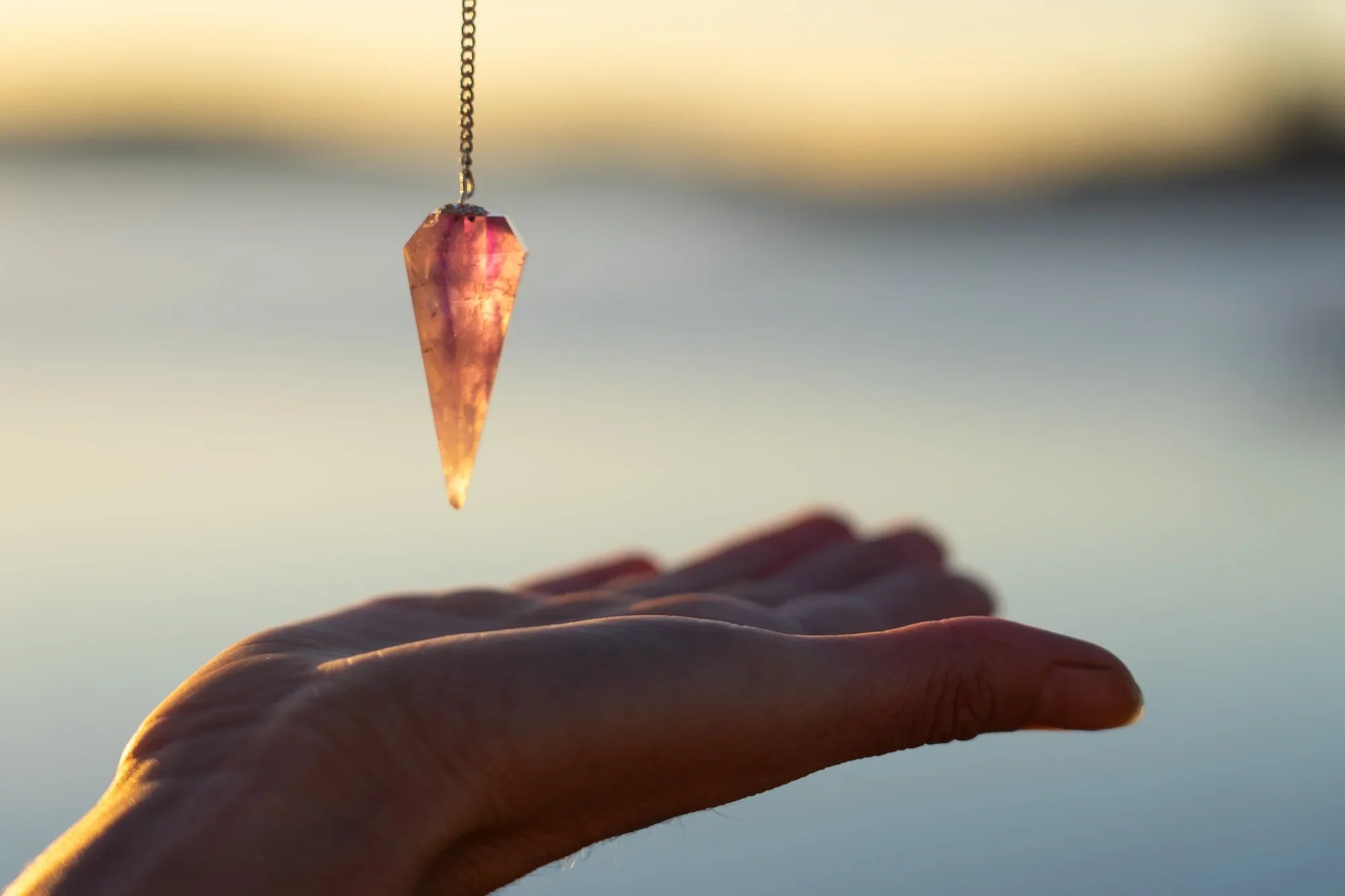
Pendulums have been used for centuries as tools for reflection, energy work, and intuitive guidance. Today, many people use a pendulum to support decision making, identify energetic imbalances, and strengthen their connection to their inner wisdom.
A pendulum is simple to use, but beginners often have questions. How do you choose the right pendulum? How do you cleanse it? How do you know what your "yes" and "no" answers look like?
This guide explains the meaning of a pendulum, its common uses, healing properties, and a step by step process for getting started with confidence.
What Is a Pendulum?
A pendulum is a weighted object suspended from a chain, cord, or metal link. When held still, the pendulum can move in different directions in response to subtle physical and energetic signals.
Many people use pendulums for:
• Intuitive guidance
• Meditation
• Energy balancing
• Chakra work
• Spiritual reflection
• Identifying energetic blocks
The pendulum itself does not make decisions for you. Instead, it acts as a tool that helps you focus your attention and connect with your intuition.
The Meaning of a Pendulum
A pendulum is often associated with clarity, awareness, and self reflection.
Many practitioners view pendulum work as a way to slow down and listen more carefully to their inner guidance. The process encourages mindfulness and intentional questioning.
When used consistently, a pendulum can become part of a daily wellness practice that includes meditation, journaling, breathwork, or energy clearing.
How Does a Pendulum Work?
A pendulum responds to very small physical movements that often occur below conscious awareness.
When you hold a pendulum and ask a question, subtle muscle movements can influence its direction.
For many people, pendulum work serves as a practical way to explore thoughts, feelings, and intuitive impressions that may not be immediately obvious.
The value comes from the process of focused attention and reflection.
Healing Properties Associated With Pendulums
Different crystals are traditionally connected with different energetic qualities.
Many people choose pendulums based on the type of support they are seeking.
Common benefits associated with pendulum practice include:
• Increased self awareness
• Improved focus
• Greater clarity during decision making
• Emotional reflection
• Energy balancing practices
• Stress reduction through mindfulness
The crystal used in the pendulum often influences how people incorporate it into their routines.

How to Choose the Right Pendulum
Choosing a pendulum does not need to be complicated.
Focus on your intention first.
Ask yourself:
• Do I want stronger intuition?
• Do I need grounding and balance?
• Am I seeking clarity during decisions?
• Do I want support for meditation?
Your answers can help guide your choice.
Grey Moonstone Protection Pendulum for Intuition
The Grey Moonstone Protection Pendulum is an excellent choice for beginners who want to strengthen intuitive awareness.
Grey Moonstone is often associated with perception, insight, and spiritual protection.
Many people choose this pendulum because it supports:
• Intuitive development
• Reflection practices
• Spiritual exploration
• Energetic protection
• Confidence during beginner dowsing
For those learning pendulum work for the first time, Grey Moonstone provides a balanced starting point.
Green Aventurine Balance Energy Pendulum
The Green Aventurine Balance Energy Pendulum combines crystal energy with copper accents.
Copper is often used in energy work because many practitioners believe it supports energetic flow and conductivity.
Green Aventurine is commonly associated with:
• Emotional balance
• Calm decision making
• Personal growth
• Positive outlook
This pendulum works well for people seeking balance and stability.
Opalite Merkabah Pendulum with Clear Quartz Point
The Opalite Merkabah Pendulum with Clear Quartz Point is particularly beginner friendly.
The clear weight distribution helps new users observe pendulum movement more easily.
Many people use it for:
• Learning pendulum techniques
• Meditation
• Energy work
• Focused questioning
The distinct point helps beginners recognize movement patterns with greater confidence.
Fluorite Pendulum for Anxiety Relief
Fluorite is often associated with mental clarity and focus.
Many people use Fluorite during stressful periods because it is connected with organized thinking and decision making.
Common uses include:
• Managing mental overwhelm
• Improving concentration
• Supporting clear choices
• Reducing distractions
For individuals who feel uncertain or mentally scattered, Fluorite can be a valuable tool.
How to Cleanse Your Pendulum
Before using a pendulum, many practitioners recommend cleansing it.
Cleansing is intended to clear previous energy and create a fresh starting point.
Method 1: Smoke Cleansing
This is one of the most common methods.
Steps:
-
Light sage, palo santo, or incense.
-
Hold the pendulum in the smoke for 30 to 60 seconds.
-
Focus on releasing unwanted energy.
-
Allow the pendulum to cool before use.
Method 2: Moonlight Cleansing
Place your pendulum near a window overnight.
Many people choose a full moon for this practice.
Method 3: Sound Cleansing
Use a singing bowl, tuning fork, or chime.
Allow the sound vibrations to surround the pendulum for several minutes.
Method 4: Selenite Cleansing
Place the pendulum beside a Selenite crystal for several hours.
Many practitioners use this method because it requires little effort.
How to Program Your Pendulum
Programming helps establish a communication system between you and your pendulum.
This process should be completed before asking questions.
Step 1: Find a Quiet Space
Choose a location with minimal distractions.
Turn off notifications and sit comfortably.
Step 2: Center Yourself
Take five slow breaths.
Relax your shoulders and hands.
Step 3: Hold the Pendulum Correctly
Hold the chain between your thumb and index finger.
Allow the pendulum to hang freely.
Keep your arm steady.
Step 4: Establish Your "Yes" Response
Ask:
"Show me yes."
Observe the direction of movement.
Common responses include:
• Forward and backward
• Side to side
• Clockwise circles
There is no universal pattern.
Your response may be different.
Step 5: Establish Your "No" Response
Ask:
"Show me no."
Watch the movement carefully.
This direction should differ from your yes response.
Step 6: Establish a Neutral Response
Ask:
"Show me maybe."
or
"Show me unclear."
This response often appears as little movement or a different pattern.
Record your results in a journal.

How to Start Using a Pendulum
Begin with simple questions.
Ask questions where you already know the answer.
Examples:
• Is my name Sarah?
• Am I sitting in a chair?
• Is today Monday?
This practice helps build confidence and consistency.
Avoid emotionally charged questions at first.
Focus on learning how your pendulum responds.
Beginner Pendulum Exercise
Try this simple five minute practice.
Step 1
Sit comfortably.
Step 2
Hold your pendulum.
Step 3
Take ten slow breaths.
Step 4
Ask:
"Show me yes."
Step 5
Ask:
"Show me no."
Step 6
Ask one simple question.
Repeat daily for one week.
Many beginners notice greater confidence after regular practice.
Using a Pendulum to Identify Energetic Blocks
Some practitioners use pendulums during personal reflection and energy work.
The pendulum serves as a point of focus.
A simple process includes:
• Sitting quietly
• Breathing slowly
• Holding a specific intention
• Asking reflective questions
Examples include:
• Where am I feeling resistance?
• What area of my life needs attention?
• What habit no longer supports me?
The purpose is awareness and reflection.
Common Pendulum Questions
Beginners often ask questions related to:
• Personal growth
• Daily decisions
• Habits
• Relationships
• Wellness goals
Keep questions clear and specific.
Avoid asking the same question repeatedly.
Mistakes Beginners Should Avoid
Asking Complex Questions
Keep questions simple.
Complex wording often creates confusion.
Using the Pendulum While Emotional
Strong emotions can affect focus.
Wait until you feel calm and centered.
Skipping the Programming Process
Always establish yes and no responses before beginning.
Expecting Instant Accuracy
Consistency develops through practice.
Give yourself time to learn.
Asking the Same Question Repeatedly
Trust the process.
Repeated questioning often creates uncertainty.
Creating a Daily Pendulum Routine
A simple daily routine may take less than ten minutes.
Morning Practice
• Take five deep breaths
• Hold your pendulum
• Set one intention
• Ask one reflective question
Evening Practice
• Review your day
• Journal key insights
• Ask one question about tomorrow's priorities
Consistency matters more than duration.
Social Media Post Ideas for JOY
Post Idea 1
How to Program Your Pendulum
• Find a quiet space
• Ask for yes
• Ask for no
• Record the movements
• Start practicing
Post Idea 2
Best Pendulums for Beginners
• Grey Moonstone for intuition
• Green Aventurine for balance
• Opalite for learning
• Fluorite for focus
Post Idea 3
Three Ways to Cleanse Your Pendulum
• Sage
• Moonlight
• Selenite
Post Idea 4
Five Minute Daily Pendulum Practice
• Breathe
• Center yourself
• Ask one question
• Reflect
• Journal

FAQs
What is a pendulum used for?
A pendulum is commonly used for intuitive guidance, meditation, energy work, reflection, and mindfulness practices.
Which pendulum is best for beginners?
The Opalite Merkabah Pendulum with Clear Quartz Point is a strong choice because its design makes movement easier to observe.
How do I cleanse my pendulum?
Common methods include smoke cleansing, moonlight exposure, sound cleansing, and placing the pendulum near Selenite.
How do I know my pendulum's yes and no answers?
Ask the pendulum to show you "yes" and "no" while holding it steady. Observe the movement patterns and record them.
Can pendulums help with decision making?
Many people use pendulums as reflection tools that encourage clarity, focus, and awareness during decision making.
How often should I use my pendulum?
You can use it daily or as needed. Even a few minutes of practice helps build familiarity and confidence.
Final Thoughts
A pendulum is a simple tool that supports reflection, intuition, and focused awareness. Whether you choose Grey Moonstone for intuitive development, Green Aventurine for balance, Opalite for beginner practice, or Fluorite for mental clarity, the key is consistency.
Start with simple questions. Learn your yes and no responses. Create a short daily practice. Over time, your pendulum can become a valuable part of your mindfulness and energy work routine.
The goal is not finding perfect answers. The goal is developing greater awareness, stronger intuition, and a deeper connection with yourself.