



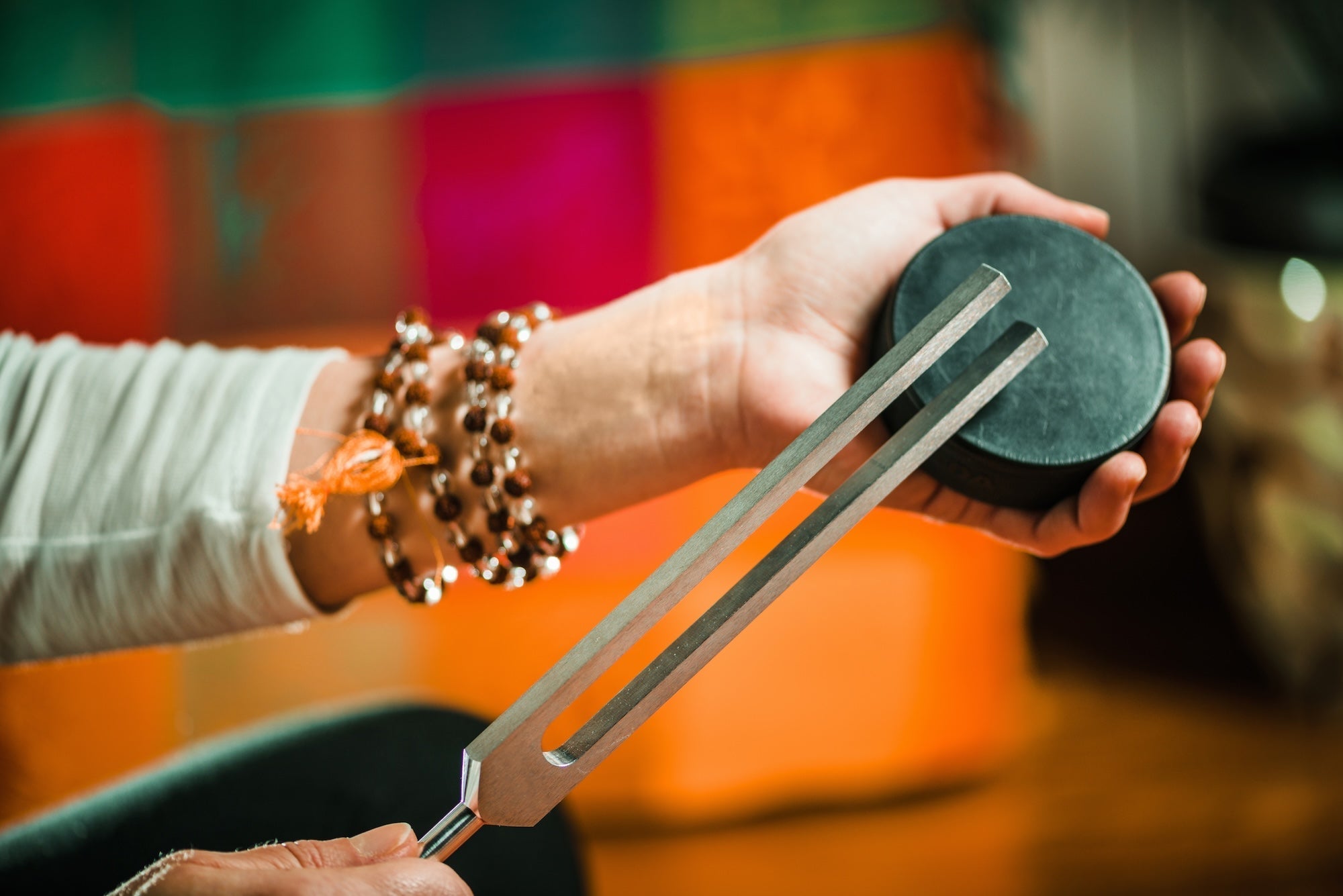
Sound has been part of healing practices for centuries. Today, tuning forks are widely used in wellness routines to support relaxation, mindfulness, and meditation. Many people also use them alongside breathwork, yoga, and other self care practices.
A tuning fork produces a precise frequency when struck. The gentle vibration can help create a calm environment, making it easier to relax and focus. Some people also use tuning forks near the body as part of sound healing sessions.
Scientific research suggests that sound and vibration may influence the nervous system by encouraging relaxation and reducing stress responses. While tuning forks are not a medical treatment and should not replace professional healthcare, they can be a useful addition to a wellness routine.
This guide explains what tuning forks are, how they work, how to use them safely at home, and which tuning forks are best for beginners.
What Is a Tuning Fork?
A tuning fork is a metal instrument with two prongs that produces a specific frequency when struck. It was originally developed for tuning musical instruments. Over time, wellness practitioners began using tuning forks during relaxation and meditation sessions.
Today, tuning forks are commonly used for:
-
Meditation
-
Breathwork
-
Relaxation
-
Mindfulness
-
Sound healing sessions
-
Stress management routines
Each tuning fork produces a different frequency, which creates a distinct sound and vibration.
How Do Tuning Forks Work?
When you strike a tuning fork, the metal vibrates at a fixed frequency. Those vibrations create sound waves that travel through the air.
When used during meditation or relaxation, these sounds can help shift your attention away from distractions and toward the present moment.
Some tuning forks are designed to be held near the ears. Others are placed gently on specific areas of the body.
Researchers continue to study how sound affects the brain and nervous system. Several studies suggest that calming sounds and music may help reduce stress, lower heart rate, and encourage relaxation.
The goal is not to cure illness. The goal is to create an environment that supports calm breathing, mindfulness, and emotional balance.
The Connection Between Sound and the Nervous System
Your nervous system constantly responds to the environment around you.
Noise, deadlines, and constant notifications keep the brain alert. Over time, this can contribute to mental fatigue.
Calming sounds often encourage the opposite response.
Many people report that sound meditation helps them:
-
Relax more easily
-
Reduce mental clutter
-
Improve concentration
-
Prepare for meditation
-
Transition into restful sleep
Slow breathing combined with soothing sound may also help activate the body's relaxation response.
This is why tuning forks are commonly used before meditation, yoga, journaling, or breathwork.
Weighted vs Unweighted Tuning Forks
Understanding the difference helps you choose the right tool.
Weighted Tuning Forks
Weighted tuning forks have small weights attached to the ends of each prong.
These produce stronger physical vibrations and are commonly placed on muscles, joints, or bones during sound therapy sessions.
Many practitioners use weighted forks to support relaxation around areas of physical tension.
Unweighted Tuning Forks
Unweighted forks create a clearer tone that travels farther through the air.
These are commonly used for:
-
Meditation
-
Mindfulness
-
Energy work
-
Sound baths
-
Personal reflection
The sound remains the main focus rather than physical vibration.

Best Tuning Forks for Beginners
Biosonic Body Tuners C256 and G384
If you are new to sound healing, the Biosonic Body Tuners C256 and G384 are an excellent place to start.
These weighted tuning forks are commonly used during body based sound sessions.
Many practitioners use them to support relaxation around areas of physical tension while creating calming vibrations.
They are especially useful for beginners because they introduce both sound and gentle vibration in a simple, easy to understand way.
Angel Tuning Forks Set of 3
The Angel Tuning Forks are designed for meditation and quiet reflection.
Many people use them to:
-
Begin meditation sessions
-
Support deep breathing
-
Create a peaceful atmosphere
-
Reduce distractions
Their gentle tones work well during evening relaxation routines.
777 Hz Peace Tuning Fork
The 777 Hz Peace Tuning Fork is a popular choice for meditation.
Many users include it in daily mindfulness practices to create a calm environment before journaling, prayer, or breathwork.
Its clear tone encourages slower breathing and focused attention.
Human Tuning: Sound Healing with Tuning Forks
Learning the basics becomes much easier with reliable educational resources.
Human Tuning: Sound Healing with Tuning Forks by Dr. John Beaulieu explains the principles behind tuning fork practice, including vibration, sound, and practical techniques for beginners.
It provides a useful starting point if you want to understand both the practical and educational aspects of sound healing.
How to Strike a Tuning Fork Correctly
Learning proper technique helps produce a clean, consistent sound.
Step 1: Hold the Stem
Grip only the stem.
Avoid touching the prongs because this reduces vibration.
Step 2: Use a Striker
Use a rubber activator or striker designed for tuning forks.
Avoid striking metal surfaces.
Step 3: Strike Firmly
Tap the tuning fork once using controlled force.
You do not need excessive strength.
A gentle, clean strike produces the best sound.
Step 4: Listen
Pause for several seconds.
Allow the sound to fade naturally.
Avoid rushing into the next strike.
Where to Place a Tuning Fork
Placement depends on the type of fork you are using.
Near the Ears
Hold the vibrating fork several inches away from each ear.
Do not place it directly inside the ear.
Listen quietly while breathing slowly.
Many people begin meditation this way.
Near the Chest
Hold the tuning fork a short distance in front of your chest while seated comfortably.
Focus on slow breathing as the sound fades.
This works well before journaling or mindfulness exercises.
Around Your Meditation Space
Some people simply activate the tuning fork and allow the sound to fill the room before meditation begins.
This creates a clear transition from daily activity into quiet reflection.
How to Use a Tuning Fork for Meditation
A simple meditation routine takes about ten minutes.
Step 1: Find a Quiet Space
Choose a comfortable area with minimal distractions.
Silence your phone.
Sit comfortably.
Step 2: Strike the Tuning Fork
Activate the tuning fork using a rubber striker.
Listen carefully.
Allow your breathing to slow naturally.
Step 3: Focus on Your Breath
Inhale for four counts.
Exhale for six counts.
Repeat for five minutes.
Step 4: Repeat the Sound
Strike the tuning fork again if needed.
Continue focusing on the sound rather than wandering thoughts.
Step 5: Finish Slowly
Take three deep breaths.
Remain seated for one minute before standing.
A Simple Daily Sound Healing Routine
You only need fifteen minutes.
Morning
-
Strike your tuning fork.
-
Take ten slow breaths.
-
Set one intention for the day.
Afternoon
-
Listen to one round of sound during a short work break.
-
Relax your shoulders.
-
Reset your focus.
Evening
-
Dim the lights.
-
Use your tuning fork before meditation.
-
Finish with quiet breathing.
Consistency matters more than session length.
Benefits of Using Tuning Forks
People often include tuning forks in wellness routines because they may support:
-
Relaxation
-
Mindfulness
-
Mental focus
-
Emotional awareness
-
Meditation practice
-
Better daily routines
Scientific evidence continues to grow in this area. Individual experiences vary, and tuning forks should be viewed as supportive wellness tools rather than medical treatments.
Common Mistakes Beginners Make
Striking Too Hard
A strong hit creates harsh sounds.
Use gentle, controlled force.
Holding the Prongs
Touching the vibrating ends shortens the sound.
Always hold the stem.
Practicing in a Noisy Room
Background noise makes it harder to focus.
Choose a quiet environment.
Expecting Immediate Results
Mindfulness improves with regular practice.
Daily sessions often feel more effective than occasional long sessions.
Using Tuning Forks as Medical Treatment
Tuning forks support relaxation and meditation.
They do not diagnose, prevent, or treat medical conditions.
Always seek professional medical care for health concerns.
Creating a Personal Sound Healing Space
A dedicated space encourages consistency.
Include simple items such as:
-
Comfortable chair or cushion
-
Yoga mat
-
Journal
-
Blanket
-
Tuning fork
-
Soft lighting
Keep the space uncluttered.
Returning to the same location each day helps establish a calming routine.
Combining Tuning Forks With Other Wellness Practices
Tuning forks pair well with other mindfulness habits.
-
Meditation
-
Breathwork
-
Yoga
-
Journaling
-
Gratitude practice
-
Quiet reflection
Many people begin with sound, continue with meditation, and finish by writing a few thoughts in a journal.

Social Media Post Ideas for JOY
Post Idea 1
Getting Started with Tuning Forks
-
Learn how to strike a tuning fork correctly.
-
Practice slow breathing.
-
Listen without distractions.
-
Build a daily habit.
Post Idea 2
Simple Five Minute Sound Meditation
-
Find a quiet space.
-
Strike your tuning fork.
-
Focus on your breath.
-
End with one positive intention.
Post Idea 3
Best Tuning Forks for Beginners
-
Learn through daily practice.
Post Idea 4
Create a Calm Evening Routine
-
Dim the lights.
-
Activate your tuning fork.
-
Meditate for ten minutes.
-
Finish with quiet reflection.
FAQs
What is a tuning fork used for?
A tuning fork is commonly used for meditation, mindfulness, relaxation, and sound healing practices. Some people also use weighted tuning forks during body based sound sessions.
Can beginners use tuning forks?
Yes. Beginners can start with one tuning fork and practice short daily sessions. Learning proper striking technique and maintaining a consistent routine are the best ways to build confidence.
What is the difference between weighted and unweighted tuning forks?
Weighted tuning forks produce stronger physical vibrations and are often used near the body. Unweighted tuning forks create clearer tones that are commonly used for meditation and sound baths.
Where should I place a tuning fork?
You can hold it a few inches from your ears, near your chest, or use it to fill your meditation space with sound. Follow the manufacturer's guidance for your specific tuning fork.
How long should a sound healing session last?
Most beginners start with 10 to 15 minutes. Short, regular sessions are often easier to maintain than longer sessions.
Can tuning forks replace medical treatment?
No. Tuning forks are wellness tools that may support relaxation and mindfulness. They should not replace medical advice, diagnosis, or treatment from a qualified healthcare professional.
Conclusion
Tuning forks offer a simple way to bring sound into your daily wellness routine. Whether you want to reduce stress, improve your meditation practice, or create a more peaceful environment at home, they provide an easy starting point.
Begin with one tuning fork and learn the basics. Practice proper striking techniques, create a quiet space, and focus on steady breathing. Weighted options such as the Biosonic Body Tuners can introduce you to body based sound practices, while the Angel Tuning Forks and the 777 Hz Peace Tuning Fork support meditation and relaxation. If you want to build your knowledge further, Human Tuning by Dr. John Beaulieu offers practical guidance for understanding sound healing.
Keep your routine simple, stay consistent, and allow your practice to develop over time. Small daily sessions can become a valuable part of your overall wellness routine.