



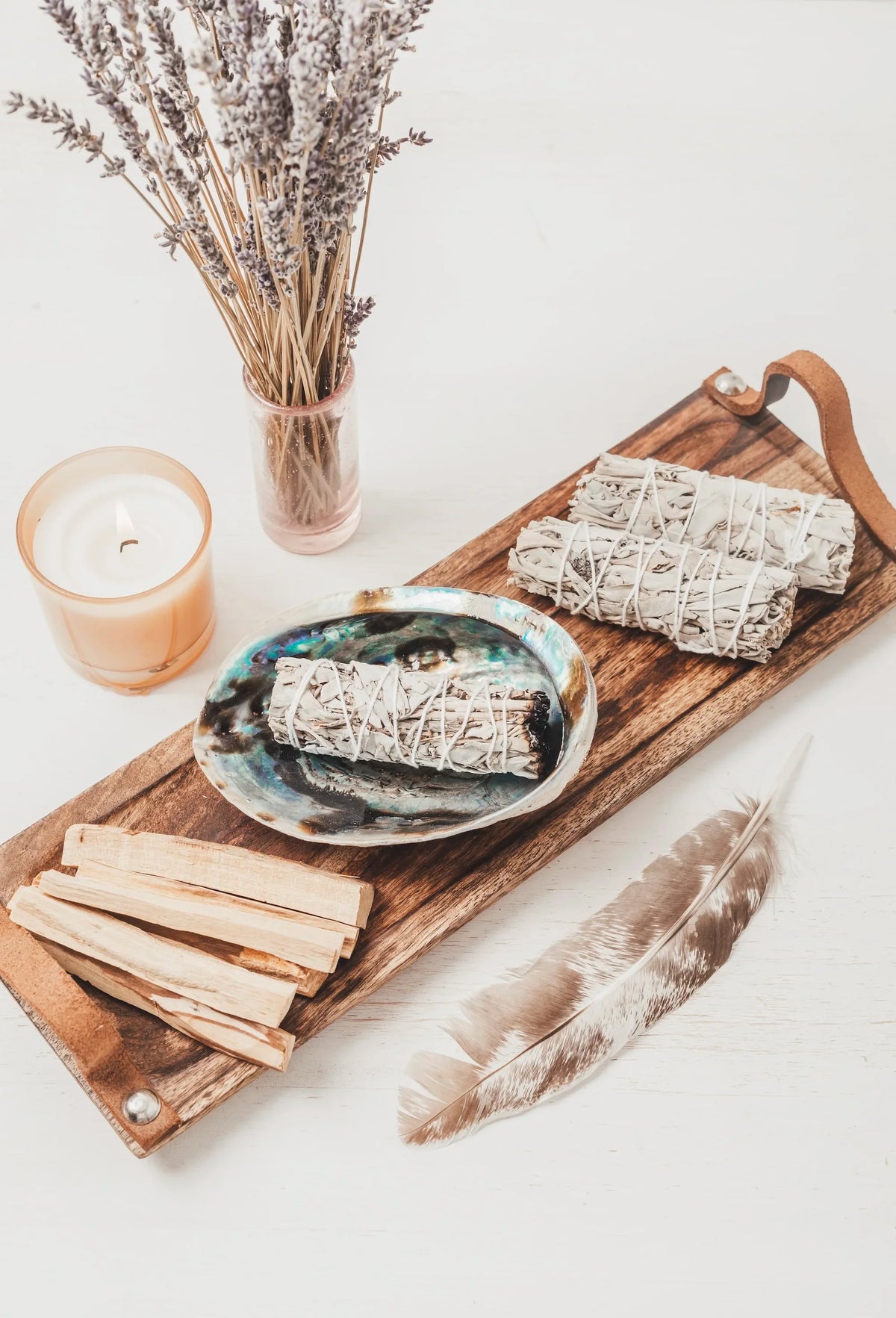
White Sage and Palo Santo are two popular botanical tools used in spiritual cleansing rituals, but they serve different purposes in many modern practices. White Sage is traditionally associated with deeper cleansing and clearing unwanted energy, while Palo Santo is often used for daily rituals, positive intentions, and creating a pleasant atmosphere.
Which one should you choose? It depends on your intention, the type of ritual you want to practice, and how you prefer to use botanical smoke in your space. Understanding their traditional uses can help you make a thoughtful choice.
Key Takeaways
-
White Sage is commonly associated with focused cleansing rituals intended to clear stagnant or unwanted energy.
-
Palo Santo is often used during daily rituals, meditation, and intention setting to create a welcoming atmosphere.
-
You can use either botanical tool on its own, depending on your personal practice and the purpose of your ritual.
-
Smoke cleansing requires ventilation, fire safety, and consideration for people and pets who may be sensitive to smoke.
-
Respect the cultural roots of these botanicals and choose responsibly sourced products.
What Is the Difference Between Sage and Palo Santo?
The main difference between White Sage and Palo Santo is their traditional use, scent, and role in spiritual rituals. White Sage is often chosen for focused cleansing, while Palo Santo is commonly associated with everyday rituals and positive intentions.
Both release aromatic smoke when burned. However, neither has been scientifically proven to remove negative energy or change the spiritual properties of a room. Their value in a spiritual practice comes from tradition, personal meaning, and the intention you bring to the ritual.
What Is White Sage Used For?
White Sage, scientifically known as Salvia apiana, is an aromatic plant native to parts of the southwestern United States and northwestern Mexico. Some Indigenous communities have longstanding ceremonial traditions involving sage and other plants. Practices vary between communities, and these traditions should not be treated as interchangeable.
In contemporary spiritual wellness settings, White Sage is often used for deeper cleansing rituals. Practitioners may choose it when moving into a new home, refreshing a room after a difficult experience, or beginning a new personal chapter.
People commonly associate White Sage with the following intentions.
-
Clearing unwanted or stagnant energy from a room.
-
Marking a fresh start after a stressful period.
-
Preparing a meditation or reflection space.
-
Creating a clear beginning for a spiritual practice.
These are spiritual associations rather than scientifically established effects. You can use them as part of a personal ritual without assuming that burning sage changes an invisible energy field.
What Is Palo Santo Used For?
Palo Santo means “holy wood” in Spanish. The name commonly refers to aromatic wood from Bursera graveolens, a tree native to parts of South America. Its wood has a warm, woody, and slightly sweet aroma.
Palo Santo has traditional uses in different South American cultural and spiritual practices. In modern wellness routines, people often use it during meditation, journaling, yoga, and daily intention setting.
Palo Santo is commonly associated with intentions such as these.
-
Welcome to a calm and positive atmosphere.
-
Setting an intention before starting the day.
-
Supporting a personal meditation routine.
-
Creating a familiar scent during quiet reflection.
-
Marking a transition between daily activities.
Some spiritual practitioners describe Palo Santo as helping raise the vibration of a space. This is a spiritual interpretation, not a measurable effect established by scientific research.
Why Is White Sage Often Chosen for Deep Cleansing?
White Sage is often selected when someone wants to give a room or personal ritual a clear sense of beginning and completion. Its role in modern cleansing practices is usually more focused than the gentle, everyday atmosphere many people seek from Palo Santo.
When Should You Use White Sage?
You might choose White Sage when you want to mark a meaningful transition or refresh a space before a new activity.
For example, imagine that you have moved into a new home. You may want to clean the rooms, organize your belongings, and create a personal ritual that marks the start of this new chapter. If smoke cleansing fits your beliefs and circumstances, White Sage may form part of that ritual.
Other occasions include preparing a dedicated meditation area, beginning a personal reflection practice, or marking the end of a challenging period.
You do not need to wait for a special event. Some people use White Sage occasionally as part of their spiritual routine. Others prefer non-smoke methods, such as tidying the room, opening a window when outdoor conditions allow, or using sound as a symbolic reset.
How Can You Use White Sage Thoughtfully?
If you choose to burn White Sage, keep the ritual simple and intentional.
-
Choose a suitable location. Use a stable, heat-resistant container and keep it away from curtains, paper, and other flammable materials.
-
Set your intention. Decide what the ritual represents to you, such as beginning a new project or creating time for reflection.
-
Light the botanical material carefully. Follow the product instructions and never leave burning sage unattended.
-
Use only a small amount. You do not need to fill the entire room with smoke.
-
Extinguish it completely. Check that no embers remain before putting the material away.
-
Ventilate the room. Allow fresh air to circulate and avoid exposing others to smoke.
If you want a product that brings White Sage into a broader spiritual routine, JOY's 7 Chakras with White Sage may be worth exploring. Consider how it fits your personal practice and follow its specific product instructions.

Why Is Palo Santo Popular for Daily Rituals?
Palo Santo is often chosen for its warm aroma and its place in everyday spiritual routines. Its scent can help signal the start of a quiet activity, such as meditation, journaling, or setting an intention for the day.
Rather than reserving it for occasional cleansing, some people include Palo Santo in a short morning or evening practice.
Can Palo Santo Help Create a Positive Atmosphere?
Palo Santo is traditionally associated with positive intentions and spiritual renewal. In modern rituals, people may burn a small piece before meditation or use the scent as a reminder to pause and focus.
For example, you might take two minutes before work to put your phone aside, breathe slowly, and identify one priority for the day. If Palo Santo is part of your practice, its aroma can serve as a sensory cue for that moment.
The ritual itself may provide structure and a chance to pause. However, there is no reliable scientific evidence that burning Palo Santo attracts positive energy or changes the vibration of a room.
How Do You Use Palo Santo in a Daily Routine?
You can keep a Palo Santo ritual brief. The goal is to make the practice suitable for your routine rather than adding another complicated task to your day.
Try these steps.
-
Choose an intention. You might focus on patience, gratitude, self-respect, or a calmer start.
-
Prepare your space. Clear a small area and place your chosen items somewhere stable.
-
Follow the product instructions. If burning Palo Santo, use a heat-resistant holder and take care around open flames.
-
Pause and reflect. Spend a minute breathing comfortably or repeating your chosen intention.
-
Extinguish the wood completely. Confirm that it is no longer burning or producing embers.
You can also enjoy Palo Santo without burning it if the product is suitable for that use. A smoke-free ritual can include a written intention, quiet breathing, or a short sound meditation.
JOY's LOVE Intention Bundle, which combines Palo Santo and rose quartz, may suit people who want to build a ritual around love, compassion, or self-care. These associations are symbolic and depend on your personal beliefs.
Sage vs. Palo Santo, Which One Should You Choose?
The right choice depends on the purpose of your ritual, your scent preference, and whether smoke is suitable for your environment.
|
Your intention |
Option to consider |
|
Marking a fresh start in a room |
White Sage |
|
Creating a focused cleansing ritual |
White Sage |
|
Setting a daily intention |
Palo Santo |
|
Adding a warm, woody scent to a ritual |
Palo Santo |
|
Preparing for meditation or journaling |
Either, or a smoke-free alternative |
|
Avoiding smoke indoors |
Neither needs to be burned |
These suggestions reflect common spiritual associations, not proven differences in their ability to affect energy.
Is White Sage Better Than Palo Santo?
Neither is universally better. White Sage is often preferred for rituals focused on clearing unwanted energy, while Palo Santo is frequently used for everyday intention setting and positive spiritual associations.
Think about what you want the ritual to represent. If you are marking a major transition, you may prefer White Sage. If you want a short daily practice before meditation, Palo Santo may feel more appropriate.
You can also choose based on aroma. White Sage has a strong herbal scent, while Palo Santo is known for a warm, woody fragrance. Personal preference matters, especially if you are sensitive to strong smells.
Can You Use Sage and Palo Santo Together?
Some practitioners use both botanicals in the same spiritual routine. For example, they may begin with a cleansing ritual using White Sage and then use Palo Santo while setting a positive intention.
However, you do not need to burn both materials to create a meaningful practice. Using multiple sources of smoke can increase indoor smoke exposure without providing a proven additional benefit.
If you choose to use both, consider using them at separate times and follow appropriate fire safety measures. You can also pair one botanical with a smoke-free activity, such as a sound meditation or a few minutes of quiet reflection.
What Are Other Ways to Refresh Your Space Without Smoke?
Smoke cleansing is not suitable for every home. People with asthma, allergies, respiratory sensitivities, or sensitivity to fragrances may find smoke irritating. It can also affect children, older adults, and pets.
If burning botanicals is not practical, you can create a meaningful ritual without smoke.
Can You Use Sound Instead of Sage or Palo Santo?
Yes. Sound can become a symbolic part of your personal ritual without burning anything. You might use a singing bowl, a tuning fork designed for sound practices, or a short recording of calming sounds.
JOY's Tibetan Brass Singing Bowl Orange, associated with the sacral chakra, is one option to consider for a sound-based practice. You can use a bowl according to its instructions and spend a few minutes listening, breathing comfortably, or reflecting on an intention.
Sound practices may help you create a regular pause in your day. However, they should not be described as scientifically proven methods of removing negative energy.
Can Crystals Be Part of a Cleansing Ritual?
Some people include crystals in spiritual routines as reminders of personal intentions. For example, they may place a crystal in a meditation area, hold one during reflection, or include it in a display that marks the purpose of the space.
JOY's Selenite Sphere may appeal to people who associate selenite with clarity or spiritual cleansing. These meanings come from crystal traditions and are not established scientific properties.
You do not need crystals, sage, or Palo Santo to practise reflection. The most useful routine is one that fits your beliefs, feels comfortable, and does not create unnecessary risks.
How Can You Use White Sage and Palo Santo Responsibly?
Before choosing either botanical, consider its cultural background, sourcing, and impact on the people who share your space.
Why Does Ethical Sourcing Matter?
White Sage has cultural significance for some Indigenous communities. Increased commercial demand has raised concerns about harvesting pressure, access, and the respectful use of sacred plants. Choose suppliers that provide clear information about sourcing and avoid assuming that every product labelled as sage comes from a responsible source.
Palo Santo also requires careful sourcing. The name is used for wood from different species, and products can vary in origin. Look for clear information about the botanical species and how the material was obtained. Prefer suppliers that explain their sourcing practices rather than making broad claims about sustainability without evidence.
Respect also means recognizing that these plants do not have the same meaning in every tradition. You can learn about their history without claiming ownership of practices that belong to specific communities.
What Safety Precautions Should You Follow?
Use these precautions whenever you burn botanical materials.
-
Never leave burning sage or Palo Santo unattended.
-
Keep burning materials away from children, pets, curtains, and other flammable items.
-
Use a heat-resistant holder on a stable surface.
-
Ventilate the room and avoid heavy smoke buildup.
-
Do not burn botanicals around people or animals who may be sensitive to smoke.
-
Keep water or another appropriate fire safety measure nearby, and ensure the material is fully extinguished.
-
Follow local fire restrictions and the instructions provided with your product.
If you have respiratory concerns, choose a smoke-free ritual. Never use smoke cleansing as a replacement for cleaning, medical care, or professional support when needed.

Frequently Asked Questions About Sage vs. Palo Santo
What Is the Main Difference Between Sage and Palo Santo?
White Sage is commonly associated with deeper cleansing rituals, while Palo Santo is often used for daily spiritual routines and positive intentions. Their roles depend on cultural traditions and individual practices.
Does White Sage Remove Negative Energy?
In spiritual practices, White Sage is traditionally used with the intention of clearing unwanted or stagnant energy. There is no scientific evidence that burning it removes a measurable form of negative energy from a room.
Does Palo Santo Attract Positive Energy?
Palo Santo is associated with positive intentions in some spiritual practices. People may use it to mark a fresh start or create a welcoming atmosphere, but research has not established that it attracts spiritual energy.
Is Palo Santo Suitable for Everyday Use?
Some people include Palo Santo in daily meditation or intention-setting routines. If you burn it, keep the session brief, ventilate the room, and consider the needs of anyone nearby. You can also choose a smoke-free ritual.
Can You Burn White Sage and Palo Santo in the Same Room?
You can use both in a personal practice, but burning them together is not necessary. Using both increases smoke exposure. Consider using them separately or pairing one botanical with a smoke-free practice.
Can You Use White Sage or Palo Santo Without Burning Them?
Yes, if the product is suitable for that purpose. You can keep an appropriate botanical item as part of a display or use it as a reminder of your intention. Do not assume that an unburned item provides the same scent or ritual experience as burning it.
Which Is Better for Meditation, Sage or Palo Santo?
Either may form part of a meditation routine. Palo Santo is often chosen for its warm aroma, while White Sage may be used before a focused cleansing ritual. If smoke distracts you or causes irritation, try meditation with a singing bowl, gentle breathing, or silence.
Conclusion
White Sage and Palo Santo have different roles in many spiritual practices. White Sage is commonly associated with deeper cleansing and marking a fresh start, while Palo Santo is often used for daily rituals, positive intentions, and a warm, woody scent.
The best choice depends on your intention, personal beliefs, and the needs of your environment. You can use one botanical, include both at different times, or create a smoke-free ritual with sound, reflection, or crystals.
Whatever you choose, learn about the traditions behind these plants, seek responsibly sourced products, and put safety first. A meaningful ritual does not need to be complicated. It can begin with a clear intention and a few quiet minutes set aside for yourself.